


Harvesting Bird’s Nest
Harvesting Patterns for Swiftlet Nests
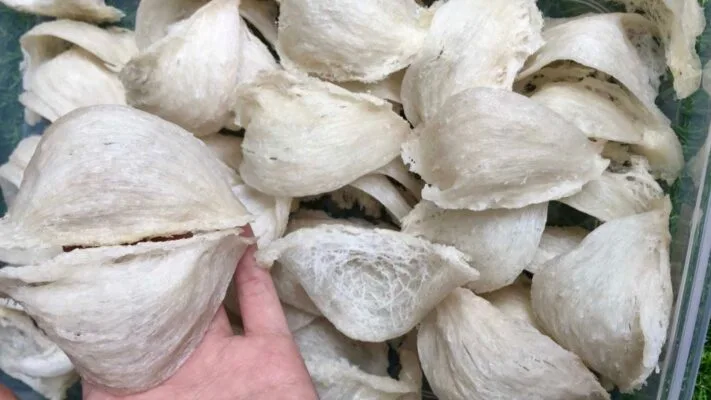
The process of harvesting swiftlet nests should not be taken lightly. It should be carried out with the right patterns and timing. This is done to obtain high-quality swiftlet nests and to preserve the population of swiftlet birds themselves. Without proper guidelines, the harvesting process could potentially lead to the swiftlet colony dispersing and not returning.
Here are the commonly employed harvesting patterns by swiftlet breeders:
The Swiftlet Gathering Pattern
This pattern involves harvesting nests after the swiftlets have constructed them, but before they are used for egg-laying. This typically occurs about 1-2 months before the rainy season. This harvesting approach has its advantages and disadvantages.
Advantages:
- Nest cleanliness is relatively maintained.
- Harvesting can be conducted more frequently, averaging 5-6 times per year.
- Birds still have the opportunity to rebuild their nests until the rainy season arrives.

The Egg-Discard Harvesting Technique
This technique is employed after the swiftlets have laid their eggs. It is suitable for swiftlet houses with larger populations. The harvesting process should ideally take place when there are two eggs in the nest. This is to prevent undue stress on the parent swiftlets and haphazard egg placement. This harvesting pattern also comes with its own set of advantages and disadvantages.
Advantages:
- Nests are relatively cleaner with fewer contaminants.
- Nest quality is good, with adequate thickness and perfect shape.
- Considered one of the highest-quality nest types due to their substantial weight.
The Fledgling Harvesting Pattern
The fledgling harvesting pattern is executed after the young swiftlets have hatched and left their nests. This approach is suitable for swiftlet houses with smaller populations. The fledgling harvesting pattern has its own set of advantages and disadvantages.
Advantages:
- This is the most natural and unobtrusive method, preserving the swiftlet colony’s regeneration.
- It does not disrupt the swiftlets’ natural behaviour.